
Boot chain
BootShim, lk1st, and fastboot path.
Experimental computing
Modern systems research on unconventional hardware.
The platform
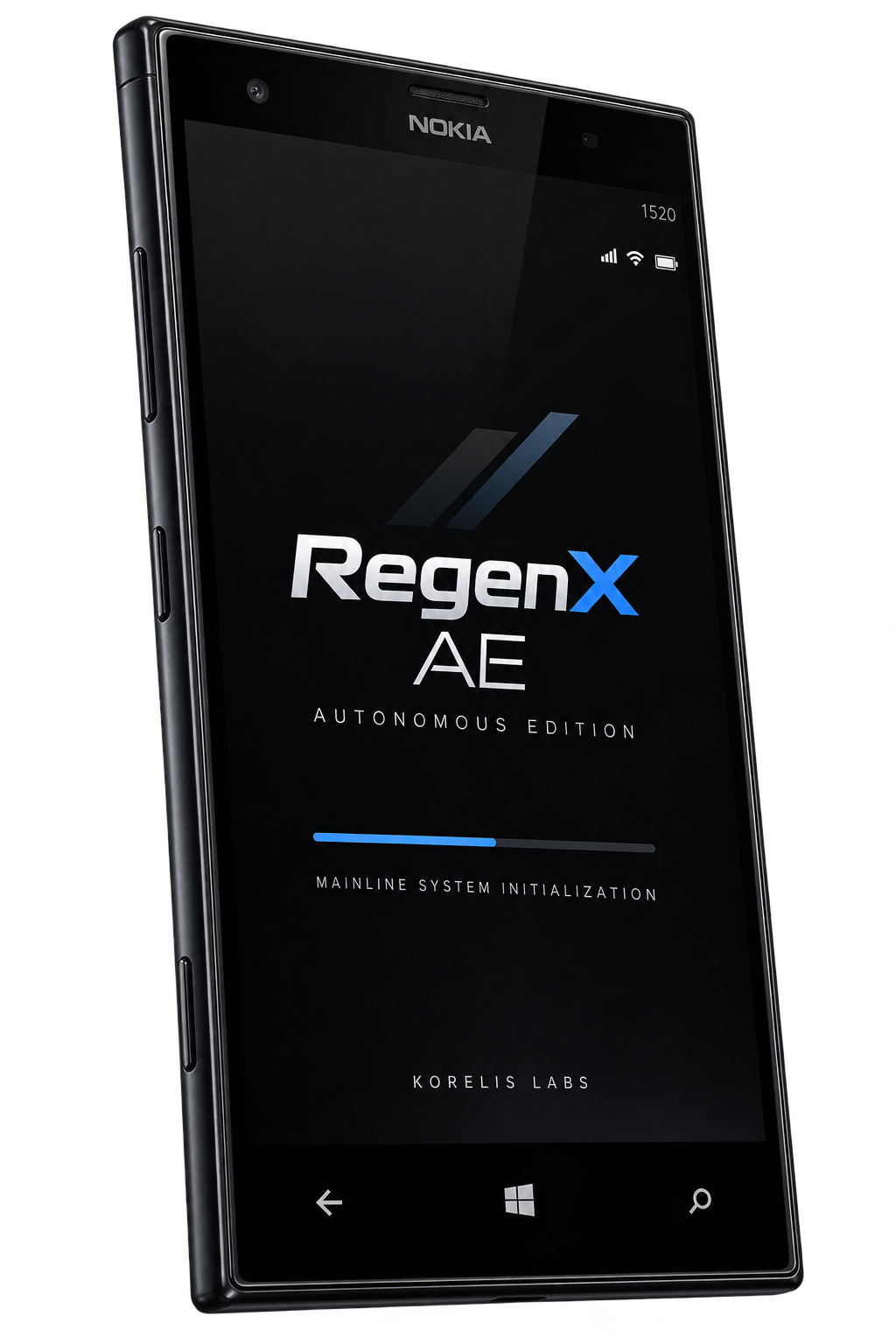
RegenX AE brings mainline Linux and postmarketOS to an AT&T Nokia Lumia 1520 RM-940 built around Qualcomm’s MSM8974 platform.
The 2013 Windows Phone hardware presents unusual bring-up challenges across the boot chain, TrustZone interfaces, power management, audio, radios, and device-specific drivers.
Boot architecture
The boot chain transitions the device from its original platform environment into a mainline Linux / postmarketOS userspace through a staged bring-up path.
Transitions from the Lumia UEFI environment into the project boot path.
Prepares the MSM8974 device for a standard fastboot workflow.
Loads the verified boot image through the development interface.
Runs the Linux 6.16 platform and ongoing device enablement.
Provides the mobile Linux userspace running from eMMC.
Boot path shown for the RM-940 configuration.
Subsystem map
The current RM-940 configuration spans working, partial, blocked, and untested subsystems as hardware enablement continues.
BootShim, lk1st, and fastboot path.
Mainline 6.16 and postmarketOS from eMMC.
SimpleDRM framebuffer and PM8941 WLED; panel power management remains open.
Synaptics RMI4 multitouch input.
Stock partitions visible; postmarketOS runs from Data.
The controller initializes; removable media remains untested.
NCM networking with SSH, plus ACM serial.
Voltage, temperature, presence, health, and status reporting.
Charging engages briefly at boot, then latches off.
Repeated s2idle suspend/wake cycles passed the recorded acceptance run.
Volume and two-stage camera buttons passed press testing.
Ambient light and proximity work; three devices remain unidentified.
TrustZone rejects secondary-core bring-up; nosmp remains required.
Both depend on the blocked WCNSS remoteproc path.
The separate firmware and processor sequence has not been tested.
No current camera implementation result.
ADSP boots with APR and q6core bound.
Control-path work is active; analog and audible output remain unverified.
Repeated s2idle cycles resumed with USB networking and essential services intact on the tested RM-940 configuration.
Bring-up milestones
The work progressed from establishing the boot chain to making the device interactive, accessible over USB, and repeatably suspendable.
The device reaches postmarketOS from internal storage through the project boot path.
Framebuffer, backlight, and multitouch support make the running system directly usable.
NCM networking and SSH establish a repeatable route into the device.
The recorded s2idle acceptance run completes ten clean suspend and wake cycles.
Audio bring-up
Current validation reaches reversible codec-control behavior; analog output and audible playback have not yet been demonstrated.
ADSP boot, APR/q6core, codec discovery, IRQ, and control paths.
RX DAI, SLIMbus, QDSP6 paths, machine card, and MCLK work.
Reversible HPHL widget-control behavior in the recorded path.
No measured analog waveform has been established.
No audible playback has been demonstrated.
Audio output remains unverified.
Hardware evidence
Open the scoped evidence record for the tested RM-940 configuration.
The evidence record identifies the tested hardware, measured result, scope, limitations, and date.
Public repository
Source code, hardware status, technical documentation, and reproducibility material are available in the public repository.
Mainline Linux / postmarketOS boots from internal storage with display, touch, and USB development access working. Radios, SMP, camera, charging behavior, modem support, and full audio output remain incomplete, blocked, or unverified.
The repository contains the device port, boot-chain documentation, hardware status, tooling, and current bring-up records.
Work with Korelis Labs
Platform bring-up, upstream engineering, and unconventional-hardware discussions are welcome.